If you picture Greenwich Village as all quiet charm and postcard views, Washington Square Park may surprise you. This part of the Village is beautiful, historic, and unmistakably New York, but it is also active from morning into late evening. If you are thinking about living near the park, it helps to understand the real day-to-day experience, and that is exactly what this guide will walk you through. Let’s dive in.
Washington Square Park Sets the Tone
Washington Square Park is the neighborhood anchor in every sense. The park spans 9.75 acres at the southern end of Fifth Avenue, and its arch, completed in 1892, remains one of the most recognizable landmarks in Manhattan.
The setting carries deep history. The site evolved from a potter’s field to a military parade ground and then into the public square you know today, with early 19th-century townhouses still shaping parts of its edge.
What matters most for daily life is how the park functions now. It is not just a scenic backdrop. It is a heavily used civic space with lawns, a restored fountain, seating, a chess plaza, a dog run, playground areas, public restrooms, paths, plantings, and other features that support constant activity.
What Daily Life Feels Like
Life around Washington Square Park changes by the hour. In the morning, the area tends to revolve around coffee runs, dog walkers, early park visitors, and neighborhood foot traffic.
As the day picks up, the atmosphere becomes more social and energetic. NYU activity, casual meetups, people-watching, and time spent in the square all shape the neighborhood’s daytime rhythm.
By evening, the focus shifts again. Restaurants, live music, theater, and bar traffic bring a more animated feel to the surrounding streets, especially along well-known dining corridors nearby.
Expect a Long Daytime Arc
One practical detail many buyers and renters overlook is the park’s schedule. According to NYC311, city parks are generally open from 6 a.m. to 1 a.m. unless a posted exception applies.
That long operating window affects how the neighborhood feels. You get extended access to one of Manhattan’s best-known open spaces, but you also get many hours of public activity before the overnight pause.
For some people, that is a major draw. For others, it is an important lifestyle consideration, especially if you are comparing a parkfront block with a quieter side street deeper into the Village.
Coffee Culture Is Part of the Routine
The café culture around Washington Square Park is not just a stereotype. Nearby coffee spots support the kind of everyday use that makes the area feel lived-in rather than purely tourist-driven.
You can picture the routine easily: grab a coffee near West 8th Street, walk over to the square, sit for a while, and watch the neighborhood move around you. That pattern works for solo mornings, informal meetings, study breaks, or an easy weekend reset.
The area also supports late-night café habits in a way many neighborhoods do not. That adds to the sense that this part of Greenwich Village stays active across more of the day than you might expect.
Dining and Entertainment Stay Close
One of the biggest lifestyle advantages here is convenience. The neighborhood around the park has a high concentration of restaurants, food spots, and off-Broadway theaters, which makes it easy to keep your plans local.
MacDougal Street stands out as a particularly dense dining corridor. More broadly, the Village’s food scene adds a casual, flexible quality to daily life because you are not relying only on destination dining or formal nights out.
That matters if you value spontaneity. A quick dinner, a show, live music, or a late coffee can all be part of your regular routine when you live near the square.
The Energy Is Real
It is worth being honest about the pace of the area. Washington Square Park is lovely, but it is not quiet simply because it is historic.
The square is designed for overlapping public uses, and nearby streets absorb student traffic, café spillover, restaurant crowds, and general neighborhood movement. During busy periods, especially when NYU activity is high, the area can feel lively and social rather than calm and tucked away.
If you are drawn to character, visibility, and constant neighborhood life, that can be a positive. If your top priority is privacy or a lower-key street presence, you may want to look carefully at how close to the park you want to be.
Housing Around the Park Is Layered
One of the most interesting things about the housing stock near Washington Square Park is its variety. This is not a neighborhood of one uniform building type.
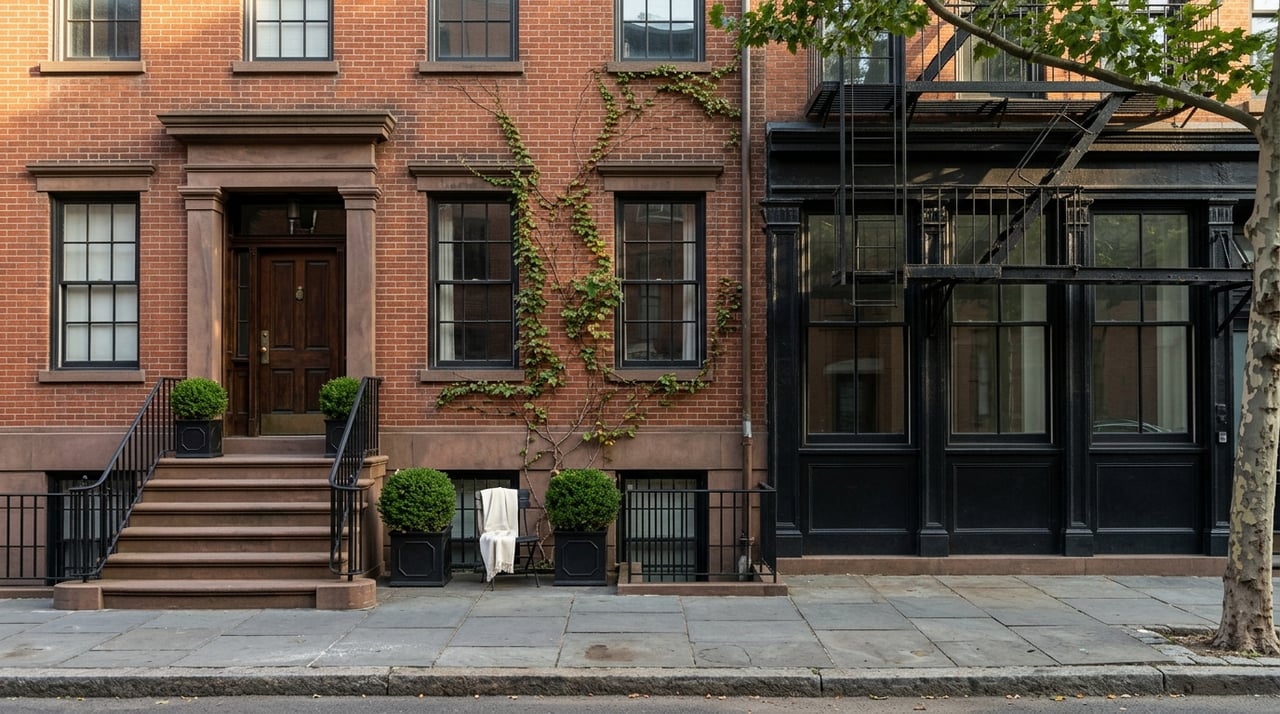
Within the broader Greenwich Village Historic District, the residential mix includes row houses, townhouses, tenements, and apartment buildings. That layered development pattern gives the area its textured streetscape and helps explain why one block can feel very different from the next.
Near the north side of the park, early Greek Revival townhouses still help define the setting. Elsewhere, you will see the long evolution of the neighborhood in converted row houses, later apartment buildings, and other mixed residential forms.
Historic Character Comes With Context
Greenwich Village’s historic identity is a major part of its appeal. The Greenwich Village Historic District, designated in 1969, remains the city’s largest historic district.
That designation helps preserve the neighborhood’s visual character. In historic districts, most exterior alterations require review and approval from the Landmarks Preservation Commission, which helps explain why so many surrounding blocks retain their distinct architectural feel.
For buyers, this can be part of the appeal of the area. You are often choosing a home within a neighborhood where the built environment has been intentionally protected over time.
Not Every Building Is Low-Rise
There is another important reality check for anyone shopping here. The immediate Washington Square area includes more than classic townhouse-scale buildings.
Washington Square Village, completed in 1959, introduced a different residential form with two 17-story apartment buildings surrounding a 1.5-acre roof garden and housing more than 1,200 families. That contrast matters because it shows the area is more architecturally mixed than the most nostalgic version of Greenwich Village suggests.
In other words, living near Washington Square Park can mean very different housing experiences depending on the building, block, and orientation. The micro-location matters.
What Buyers and Renters Should Think About
If you are considering a move near Washington Square Park, the key is balance. The immediate park area offers instant access to one of Manhattan’s most iconic open spaces, plus café culture, dining, theater, and a strong sense of place.
At the same time, that access comes with visibility, foot traffic, and a more active street environment. Parkfront living often means trading some quiet and privacy for energy, architecture, and a front-row seat to daily neighborhood life.
That tradeoff is not good or bad on its own. It simply depends on how you want your home to feel when you step outside.
Why the Right Block Matters
In a neighborhood like this, small geographic shifts can change your experience. A home facing the park may feel very different from one a few blocks away on a more residential side street.
Building type matters too. A historic townhouse setting, a converted row house, and a larger apartment building can each offer a very different sense of scale, light, noise, and privacy.
That is why broad neighborhood appeal only tells part of the story. The best fit usually comes from matching your daily habits and priorities to a very specific pocket within the Village.
If you are exploring Greenwich Village or comparing it with other Manhattan neighborhoods, working with a local advisor can help you look beyond the postcard version and focus on what daily life will actually feel like. To talk through your goals with a Manhattan real estate expert, connect with Darya Goldstein.
FAQs
What is daily life like near Washington Square Park in Greenwich Village?
- Daily life near Washington Square Park is active and changes throughout the day, with mornings centered on coffee and park use, daytime shaped by neighborhood and NYU foot traffic, and evenings leaning into dining, theater, music, and nightlife.
How big is Washington Square Park in Greenwich Village?
- Washington Square Park covers 9.75 acres and serves as the central public space and visual anchor of the surrounding Greenwich Village area.
What hours is Washington Square Park generally open?
- NYC parks are generally open from 6 a.m. to 1 a.m. unless a posted exception applies, which gives the area a long daily period of activity.
What types of homes are near Washington Square Park?
- Housing near Washington Square Park includes historic townhouses, row houses, tenements, converted residential buildings, apartment houses, and larger mid-century apartment developments.
Is the area around Washington Square Park quiet or busy?
- The area is generally lively rather than quiet, with regular public activity in the park and steady foot traffic from residents, students, diners, and visitors.
Why do homes around Washington Square Park look so historic?
- Much of the surrounding area is within the Greenwich Village Historic District, where exterior changes typically require Landmarks Preservation Commission review, helping preserve the neighborhood’s architectural character.
Is living right by Washington Square Park a good fit for everyone?
- Living near the park can be a great fit if you value energy, convenience, and immediate access to an iconic open space, but it may be less ideal if you prefer a more private or lower-traffic setting.