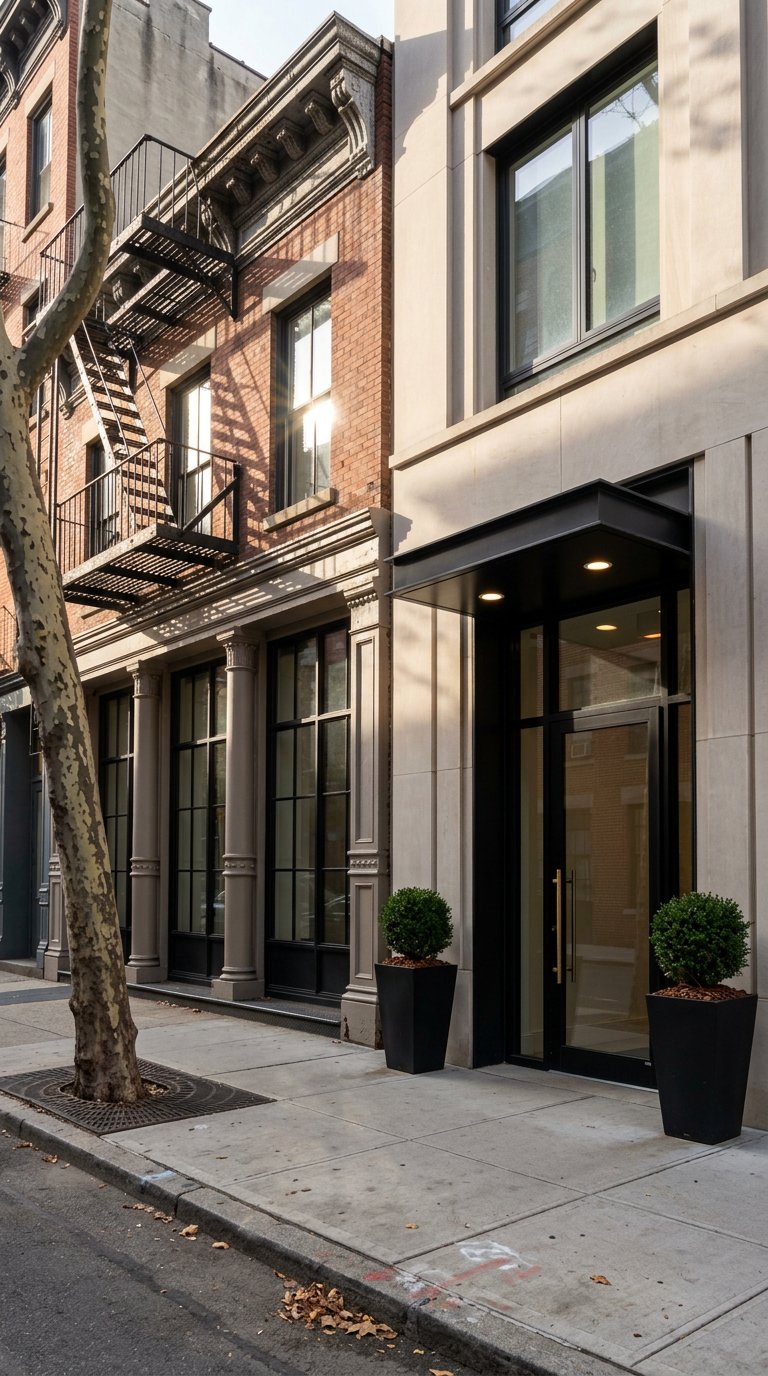
Thinking about a condo in NoMad, but not sure how prices, timing, and investor math stack up? You are not alone. This compact neighborhood north of Madison Square Park blends boutique loft conversions with a few standout towers, which can make valuations and monthly costs feel tricky. In this guide, you will get clear pricing context, a timing playbook, and a practical framework to compare buildings and model returns. Let’s dive in.
NoMad at a glance
NoMad sits between Flatiron and Midtown South, with Madison Square Park as a southern anchor. Boundaries are commonly described as East 25th to East 29th or 30th Streets, from Sixth Avenue to Madison or Lexington. The area is compact, very walkable, and offers strong access to Midtown and Union Square. For background and history, see the neighborhood overview on Wikipedia’s NoMad page.
What condos cost in NoMad now
Pricing signals vary by source and whether you look at list prices or closed sales. Recent snapshots show closed-sale medians near the high six to low seven figures, while list medians often run higher given new development inventory. For example, PropertyShark’s NoMad trends page has shown medians around the $2.2–$2.5 million range in recent reporting. Some listing portals have reported higher median list prices in select months, reflecting sponsor ask levels and luxury product.
What this means for you: focus on recent closed $/sqft comps for similar units and track list-to-sale trends by building. Expect meaningful differences between a restored loft resale and a new full-service tower.
Market balance and how to time it
NoMad has a small, building-driven inventory, so months of supply and days on market can swing with seasonality and new launches. Across Manhattan, buyer activity has improved at times as affordability shifted, though the $2 million plus segment still sees a high share of cash buyers. For citywide context, review StreetEasy’s take on improving affordability.
Signals to watch in NoMad:
- Inventory trends and 3 to 6 month rolling medians rather than a single month.
- Building-specific dynamics, like a sponsor releasing a batch of units or a sellout that tightens supply.
- Seasonal patterns, with spring and fall often more active.
What could boost supply next
Policy shifts matter for Manhattan’s pipeline. New York introduced tax incentive frameworks 485-x and 467-m after the prior 421-a program lapsed for new filings. NYC HPD published proposed rules, which are shaping where and how developers build. You can read the policy backdrop in HPD’s overview of the new incentives programs and proposed rules.
For nearby product, watch office-to-residential conversions in the Flatiron–NoMad corridor. High-profile conversions, like the Flatiron Building, can add one-off but influential inventory. See a running look at the area through 6sqft’s Flatiron/NoMad coverage. For a broader pipeline view, use REBNY’s construction updates, including the Q1 2025 pipeline report.
New development vs. resale: pricing and product
New development condos in Manhattan typically trade at a premium to resale. Published estimates vary by segment, but a practical working range for the premium is about 25 to 40 percent, driven by finishes, ceiling heights, window walls, and full amenity suites. For a market discussion, see CityRealty’s analysis of new development pricing dynamics.
Local touchpoints:
- 277 Fifth Avenue is a Viñoly-designed tower with a deep amenity program and strong $/sqft that serves as a useful benchmark for top-tier product in and near NoMad. Explore a building snapshot on CityRealty’s 277 Fifth page.
- Resale loft conversions may offer larger footprints, character details, and lower monthly carrying costs, but with fewer amenities and more varied finishes.
How to use this: price your targets in $/sqft against recent closed comps for the same building or nearest peer set over the last 6 to 12 months, then weigh carrying costs and amenity value.
Amenities and your monthly costs
A deep amenity stack can support premium pricing and stronger renter appeal, but it usually raises monthly common charges. Pools, doormen, private dining rooms, and extensive lounges require larger operating budgets and reserves. If you value convenience and long-term demand, that tradeoff can work. If near-term yield is the priority, thinner amenity buildings with lower monthlies can improve cash flow. For examples of how amenities and fees pair with valuations, scan building summaries like CityRealty’s 277 Fifth overview.
Taxes and incentives to review
A handful of relatively recent buildings may still carry sponsor benefits or temporary abatements that reduce property taxes during the early years. Always confirm the actual tax bill and any abatement schedule in the offering plan or recorded disclosures. For a high-level review of how abatements affect monthlies, see CityRealty’s look at apartments with tax savings. For policy mechanics behind newer programs 485-x and 467-m, refer back to HPD’s incentives overview.
How to compare buildings in NoMad
Use this quick checklist to keep your analysis consistent:
- Product and title
- Confirm condo vs. co-op vs. condop. Condos are typically more investor friendly. Review the offering plan or condo documents.
- Recent closed comps
- Pull 6 to 12 months of closed $/sqft comps by line and bedroom count. Prioritize sold data over ask.
- Monthly carrying costs
- Common charges plus property tax. Convert to $/sqft to compare across buildings.
- Amenity fingerprint
- Note which amenities are included versus fee-based. Ask whether the mix justifies higher monthlies.
- Financial health
- Review the latest budget, reserves, and any current or planned special assessments.
- House rules that affect investors
- Sublet policy, board consents, short-term rental restrictions, and pied-à-terre rules.
- Unit economics for rent-out plans
- Realistic rent comps, vacancy assumption, and management or turnover costs.
- Liquidity and exit
- Typical days on market, recent sales velocity, and any remaining sponsor inventory that could impact resale.
Simple investor math for NoMad condos
- Step 1: Estimate achievable monthly rent for a close comp in the same building tier.
- Step 2: Annual gross rent equals monthly rent times 12.
- Step 3: Subtract vacancy and management. A common approach is 5 to 10 percent for vacancy and 8 to 15 percent for management, depending on your plan.
- Step 4: Subtract annual common charges and property taxes to get net operating income (NOI).
- Step 5: Compute cash-on-cash. Divide projected annual cash flow by your total cash invested. Compare this return to alternatives after tax.
Do not forget New York closing costs in your model. Mansion tax applies at purchase prices above $1 million, and mortgage recording tax applies on financed deals. Factor these up front.
When to act vs. wait
Consider waiting when:
- A cluster of new development closings is due nearby in the next 3 to 9 months.
- Rate shifts slow buyer activity and increase your negotiating leverage.
- Pipeline data shows supply building in your target tier. See REBNY’s construction pipeline reports.
Consider acting now when:
- A high-quality unit hits your exact specs for exposure, layout, and building profile.
- You see evidence of tightening supply, like shorter days on market and fewer active comps.
Common NoMad condo types you will see
- Restored loft conversions: Larger rooms, high ceilings, character details, and varied finish levels. Often lighter on amenities with lower monthlies.
- Boutique new towers: Smaller unit counts, design-forward finishes, and curated amenities. Premium $/sqft is typical.
- Full-service high rises: Doorman, pool or spa, and multiple lounges that justify higher monthlies. These often attract both end users and premium renters.
How I help you buy in NoMad
You deserve a clear plan and confident execution. I help you map the market, verify $/sqft comps, model carrying costs and cash flow, and negotiate building by building. With access to Compass and the Hoffman Team’s resources, you get coordinated support from first tour through closing, plus introductions to vetted attorneys, lenders, and inspectors. If you are selling to trade up, I can coordinate pre-list prep through Compass Concierge to speed your sale and protect your next purchase timeline.
Ready to move from research to results? Let’s tailor a game plan to your budget, timing, and goals. Reach out to Darya Goldstein to start your NoMad condo search with confidence.
FAQs
What is NoMad and where is it located?
- NoMad is a compact Manhattan neighborhood north of Madison Square Park, commonly bounded by East 25th to East 29th or 30th Streets and Sixth Avenue to Madison or Lexington. See Wikipedia’s NoMad overview for context.
How much do NoMad condos cost right now?
- Medians vary by source and by list versus closed sales. Recent reporting shows closed-sale medians in the high six to low seven figures, with PropertyShark’s trends around $2.2–$2.5 million and some months of higher list medians due to luxury inventory.
Is now a good time to buy a NoMad condo?
- It depends on unit quality, inventory, and your financing. Consider acting when a top-fit unit appears and demand tightens. Consider waiting if nearby new development deliveries or pipeline data suggest more supply soon. REBNY’s pipeline reports help with timing.
Do new development condos cost more than resales in NoMad?
- Typically yes. Manhattan new development often trades at a roughly 25 to 40 percent premium due to finishes, amenities, and marketing. See CityRealty’s new development pricing discussion for context.
How do tax abatements and incentives affect my costs?
- When present, abatements can materially reduce property taxes in early years and improve cash flow. Always verify the actual tax bill and abatement schedule in the offering plan. For background, review CityRealty’s look at apartments with tax savings and HPD’s incentives overview.