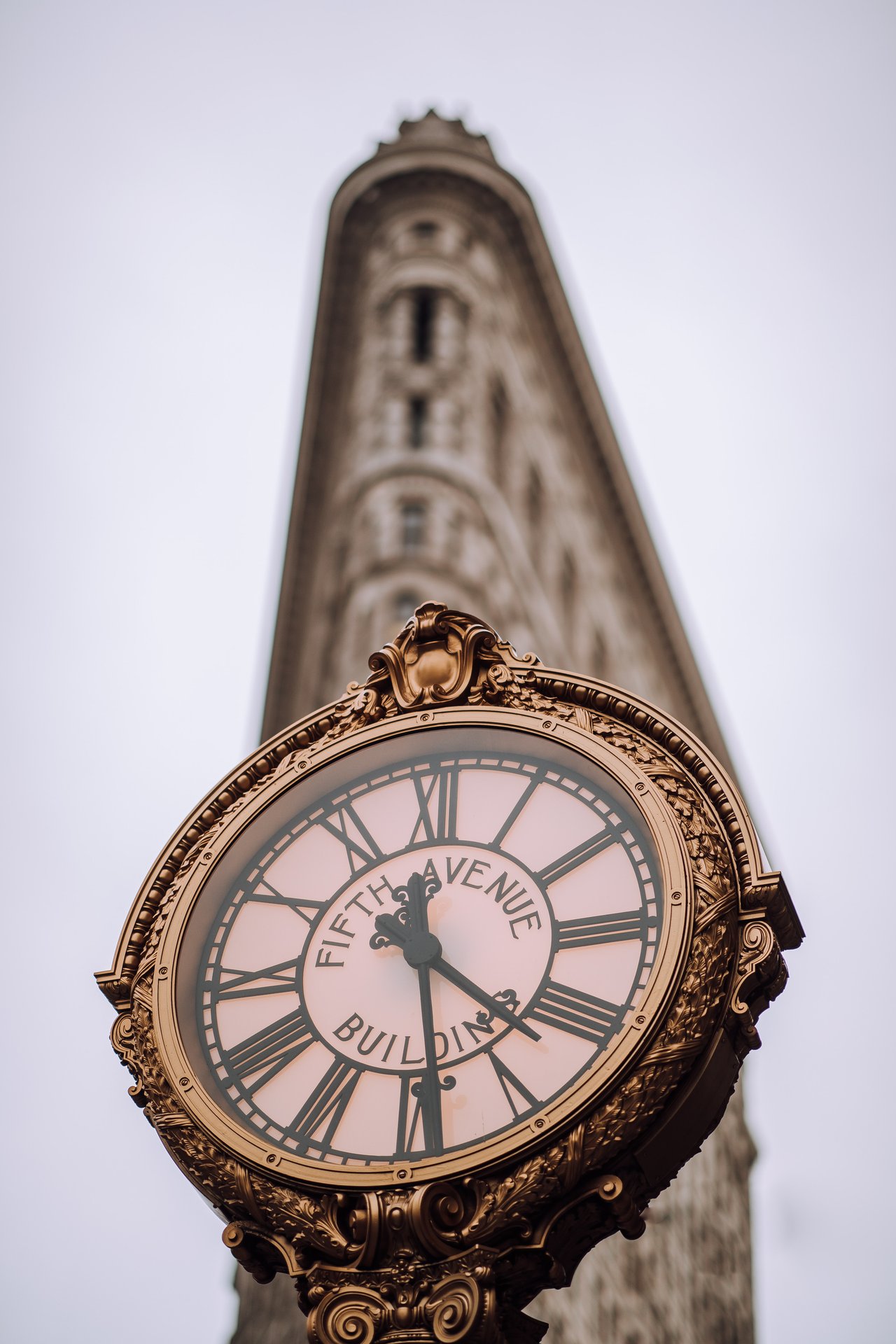
If you spent any of the three Saturdays in August walking down a car-free Broadway during Summer Streets, or stopped by the food market on the Jazz Festival's closing weekend, you likely passed at least three storefronts mid-buildout on the same six blocks. That is not a coincidence of timing. It is the visible middle of a pattern that started in February and will keep unfolding through the rest of the year: London's most talked-about Indian restaurant groups have all chosen the same short run of Broadway to make their New York debut, and they are doing it in a deliberate order rather than all at once.
The obvious story is "NoMad is having a moment." The more useful one, for anyone who already lives here, is that this moment has an address, a sequence, and a second layer underneath it that will change your Tuesday lunch options long before the marquee names finish their fit-outs.
Three Restaurants, Three Blocks, One Staggered Calendar
Start with the headline arrivals. Ambassadors Clubhouse, the Punjabi restaurant from London's JKS Restaurants, opened at 1245 Broadway in February 2026, occupying two floors and roughly 8,000 square feet, with a street-level bar and parlor over a subterranean dining room built around two private spaces, the Jungli Room and the Raja Rani Room. It is the sibling of the two-Michelin-starred Gymkhana in London. Reservations release monthly, and the waitlist for a table reportedly climbed as high as 32,000 people at its peak.
A few blocks north, Dishoom has signed for 11 East 26th Street, its first restaurant anywhere outside the United Kingdom. Crain's New York Business reported the address in June 2026, and the brand's leadership has pointed to a late-2026 target rather than a firm date. Dishoom arrives with real capital behind it: a 2025 investment from L Catterton, the private equity firm backed by LVMH, that reportedly valued the group near $400 million.
Kricket, the modern Indian small-plates group founded by Rik Campbell and Will Bowlby in a Brixton shipping container, is planning its own 2026 Manhattan debut, following a two-night pop-up dinner at the Lower East Side's Comal last October. Kricket has not announced its exact address yet, but it will be the third London Indian import to plant a flag in the same few blocks within a single calendar year.
| Restaurant | Address | Status | Format |
|---|---|---|---|
| Ambassadors Clubhouse | 1245 Broadway | Open since February 2026 | Punjabi fine dining, JKS Restaurants |
| Dishoom | 11 E. 26th St. | Signed, targeting late 2026 | First US location, all-day Bombay café |
| Kricket | Not yet announced | Planned for 2026 | Modern Indian small plates |
Three competitors, three different formats, three different price points, and none of them opening in the same season. That staggering looks intentional once you hear how Dishoom's own leadership talks about expansion. Its chief executive, Brian Trollip, has said the group's approach is to open "where we feel like we've got a story to tell," a line that reads less like marketing and more like an explanation for why a brand with a decade of demand behind it is still taking its time on a single address a few blocks from a competitor that already has 32,000 people on a list.
The Corridor Doing the Attracting
None of this happens without the real estate underneath it. The retail stretch of Broadway just south of these addresses, running from 14th to 23rd Streets, was leasing at an average of $371 per square foot in the second quarter of 2026, according to a CBRE report cited by Commercial Observer. That is the segment just below where Ambassadors Clubhouse, Dishoom, and Kricket are landing, and it tells you the corridor's pull extends well past NoMad's own blocks. A single stretch of Broadway running from the low teens through the high twenties has become dense enough, in foot traffic and office population, to support a competing set of London imports without any of them needing to be more than a few minutes' walk from the others.
The Quieter Layer Arriving on the Same Blocks
The fine-dining wave gets the headlines, but the faster, cheaper layer arriving on these same blocks is the one that actually reshapes a resident's week. Consider what is stacking up within a few hundred feet of the Indian restaurant cluster:
- Yalla Motek, a fast-casual Mediterranean concept, signed a lease for 2,500 square feet at 1147 Broadway, a space currently occupied by PLNT Burger, with an opening targeted for later this year. It is the quick-service sibling of Motek, whose own full-service restaurant is planned nearby on Broadway in the Flatiron District.
- TAP Brazilian Café, a gluten-free fast-casual concept built around açaí bowls and pão de queijo, opened at 261 Fifth Avenue on August 12, 2026, joining existing locations in Midtown East, Astoria, the Upper West Side, and Miami.
- Rito, a coffee counter tucked into the back of a NoMad barbershop, is already serving pastries alongside its espresso, with a discounted happy hour between noon and 3 p.m.
That last one is not an isolated novelty. A few doors down, Fellow Barber's NoMad location at 1149 Broadway pairs its barber chairs with Butler Bakeshop, a coffee and pastry counter using Intelligentsia beans. Two separate barbershops on the same stretch of Broadway have each decided a coffee counter belongs next to the chairs, which says something about what this corridor's daytime foot traffic actually wants between meetings.
Why the Sequence Matters More Than Any Single Opening
The easy read on all of this is "more restaurants, good for the neighborhood." The more accurate read is that a resident's actual routine changes on a rolling basis rather than all at once. Ambassadors Clubhouse has already reset what a special-occasion dinner looks like on these blocks since February. TAP already reset what a fast weekday lunch looks like this month, and Yalla Motek is about to add to that same rotation later this year. Dishoom and Kricket, whenever they land, will reset what a casual weeknight dinner costs and how far in advance you need to plan for it. None of these are competing for the same slot on your calendar, which is exactly why a corridor can absorb three high-profile Indian restaurant debuts in a single year without any of them cannibalizing the others.
If you want a preview of what booking a table at the highest-profile of these will require, Ambassadors Clubhouse's own release pattern is instructive: reservations open roughly midway through each month for the following month, walk-ins are accepted but not held, and the restaurant's own staff have noted that a 4 p.m. arrival gives walk-ins the best odds. Dishoom and Kricket have not published anything like that yet, but if Ambassadors Clubhouse's waitlist is any indication of appetite for this category on these blocks, expect the same scramble when they do.
What This Says About the Blocks Themselves
The jazz festival closed out its run in Madison Square Park on August 8, presented by the NoMad Alliance alongside the Flatiron NoMad Partnership and the Madison Square Park Conservancy, and the last of the three citywide Summer Streets Saturdays, which routed car-free crowds down Broadway and Park Avenue South, wrapped up August 15. Both events are part of a longer effort by these same neighborhood groups to build this corridor's identity as a place people walk through on purpose rather than just pass by on the way somewhere else. The restaurant wave landing on Broadway right now is the commercial version of the same bet: that this specific stretch, not NoMad broadly, is worth the risk of opening next to a direct competitor.
For anyone who already lives on or near these blocks, the practical takeaway is timing. The fine-dining reservations will stay hard to get for a while. The fast-casual options are about to multiply within a five-minute walk. And the corridor itself, the one drawing $371-per-square-foot asking rents just a few blocks south, is going to keep pulling names here whether or not any single opening makes headlines again.
If you are watching how a stretch of blocks like this one changes what your building, your commute, or your own plans look like day to day, that is exactly the kind of on-the-ground read Darya Goldstein tracks across Manhattan's neighborhoods. Let's Connect if you ever want to talk through what a corridor like this means for where you live now or where you might want to be next.